
Most outdoor space is designed to look good in a render. The question that decides whether it works is simpler: is it comfortable enough to stay in? On a residential podium in Dubai, we set out to answer that with data before a single line was drawn, and then to measure the result after people moved in.
Four degrees decides it
In our behavioural study of the podium, people left after about 8 minutes when the air was 28°C. At 24°C they stayed for 18 minutes or more. That is a 2.25 times difference in dwell time, from four degrees. A bench in full sun is just an expensive sculpture.
The comparison was against similar developments without comfort led design, and it is the reason we start every project with the climate and not with the layout.
What four degrees means in practice
Eight minutes is long enough to cross a space and perhaps to pause. Eighteen minutes is long enough to sit, meet a neighbour, let a child play or finish a coffee. The difference is not that the second space is more beautiful. It is that the second space is comfortable enough to give people a reason to stay.
That is why we treat the evening comfort target, a UTCI of 22 to 26°C, as a design brief and not a report. It tells us what the shade, the planting and the airflow have to achieve before we decide what the space looks like.
Comfort is designed, not assumed
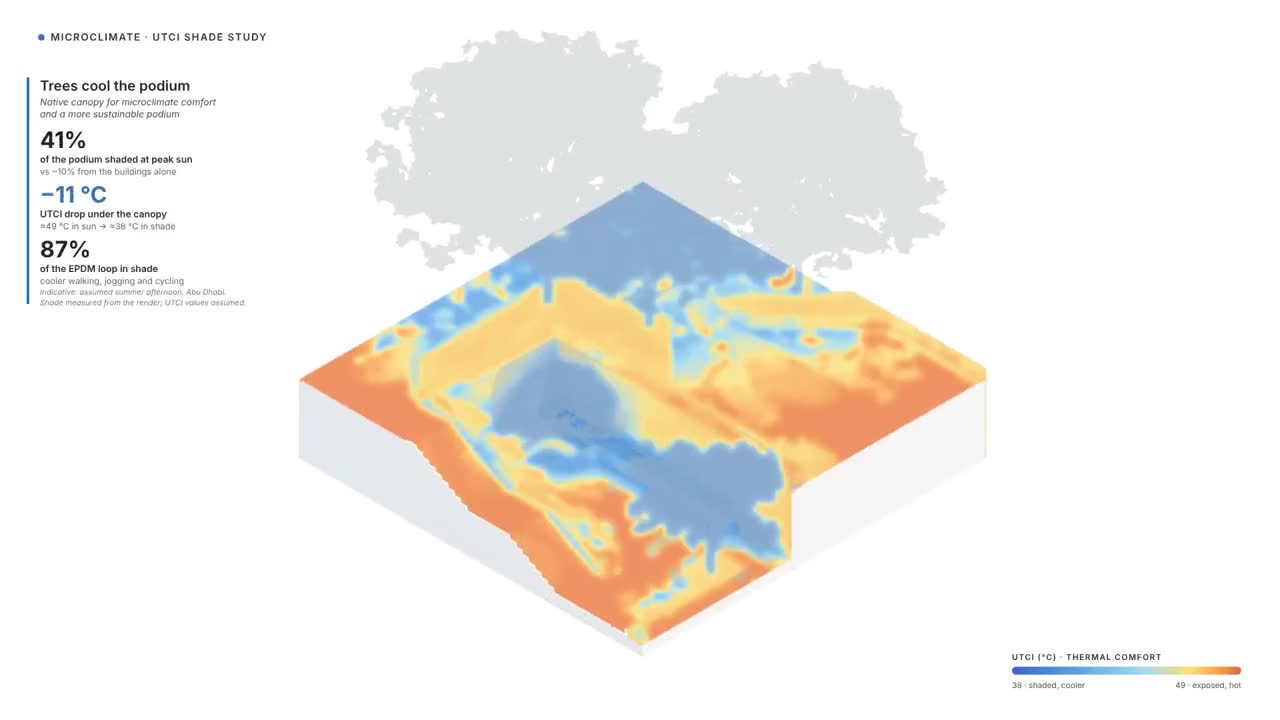
Shade, planting, water and airflow all change how a place feels. We set a comfort target for the evening, a UTCI of 22 to 26°C, and test the design against it. If a space cannot reach the target, we change the design, not the target.
On the podium that meant treating each zone as its own climate problem:
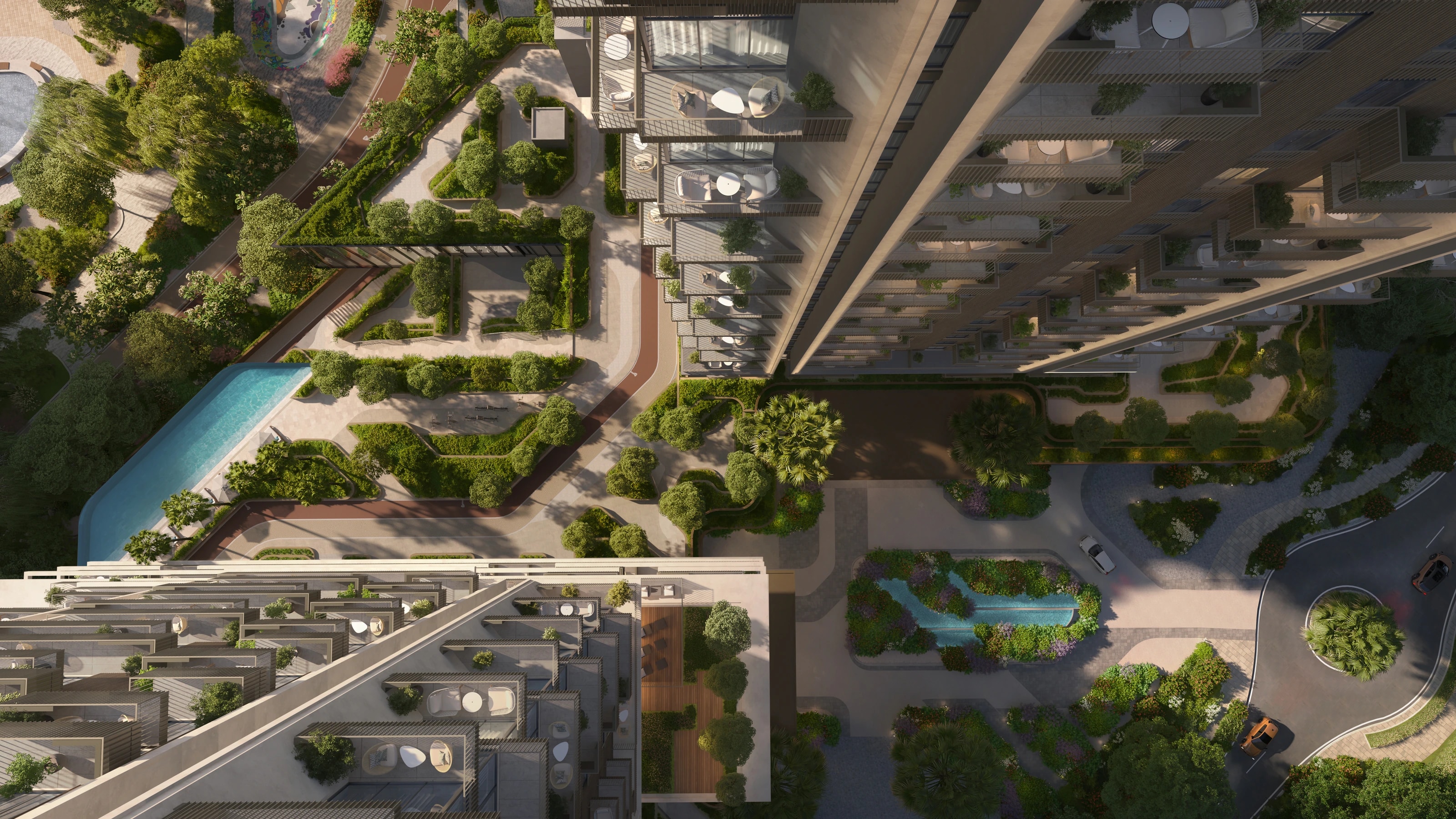
The arrival. The entry sequence is shaded before residents reach the lobby, so the first experience of the building is comfortable, not exposed.
The wellness deck. A podium deck cool enough to use at midday, not just after sunset. That single change adds usable hours to the amenity.
The vertical garden. Planting doing structural shading work, not just decoration.
More usable space, not more space
A podium does not need to be larger to be used more. It needs more hours of comfort. Modelling sun, shade and wind across the day shows which areas will work, which will not, and what it takes to fix them. The result is a podium where more of the area is genuinely usable, at more times of day.
From 8 minutes to 14 to 18
In comparable developments, average daily time outdoors is about 8 minutes. Our comfort led strategy can lift that to 14 to 18 minutes, bringing higher retail spend, a community people want to belong to, and value uplift when done right. The podium is the same size. What changes is how many hours, and how many people, it works for.
Where AI helps
Testing many layouts against the same climate data is slow by hand. With computational models and AI assisted analysis we can compare far more options than a conventional process allows, and reach the design that makes the most of the space. The designer still decides; the data makes the decision easier to defend.
The commercial point
Dwell time is not a design nicety. In a residential development it shows up as amenity value, as time spent on terraces and in shared spaces, and in how the development is perceived. Every dwell minute has a price, which is why comfort belongs at the start of the design and not at the end.
Why landscape design intelligence matters
Designing smarter is only possible if the questions are asked early and answered with evidence. That is what Landscape Design Intelligence does. It reads the climate, models how people will use each zone, prices the options and plans for how the planting will grow, all before the layout is fixed.
Without it, comfort is a hope that is checked after handover, when a hot, empty deck is expensive to fix. With it, comfort is a measurable target that the design has to meet. A developer gets an outdoor space that is used for more hours of the day, and a design that can be explained in commercial terms.
Source: FFS behavioural study, residential podium, Dubai, against comparable developments.
Share on LinkedIn