
Fluidic landscape design
Planting, water, paths and terrain drawn as one flowing system, so the landscape moves the way people and water do.
01 — The idea
What fluidic landscape design is
In fluidic landscape design we draw the lines of movement, drainage and shade first, then fit the paths, planting and terrain to them. Planting, water, paths and terrain are designed together as one landscape.
Edges are soft and planting beds interlock, so people can find their way without signs or barriers. It also works practically. Continuous planting shades more ground, curved routes slow people down where they should pause, and connected beds are simpler to irrigate and drain.
02 — How we do it
How we design it
We start with the site data: sun, wind, levels and the routes people already take. From that we draw flow lines, which show where people, water and shade will go. Parametric rules then turn the flow lines into planting areas, terraces and edges, and we test each option before we draw it up.
We have used the same method on a 750 hectare coastal landscape and on the planted edge of a residential podium.
03 — In practice
Where we have used it
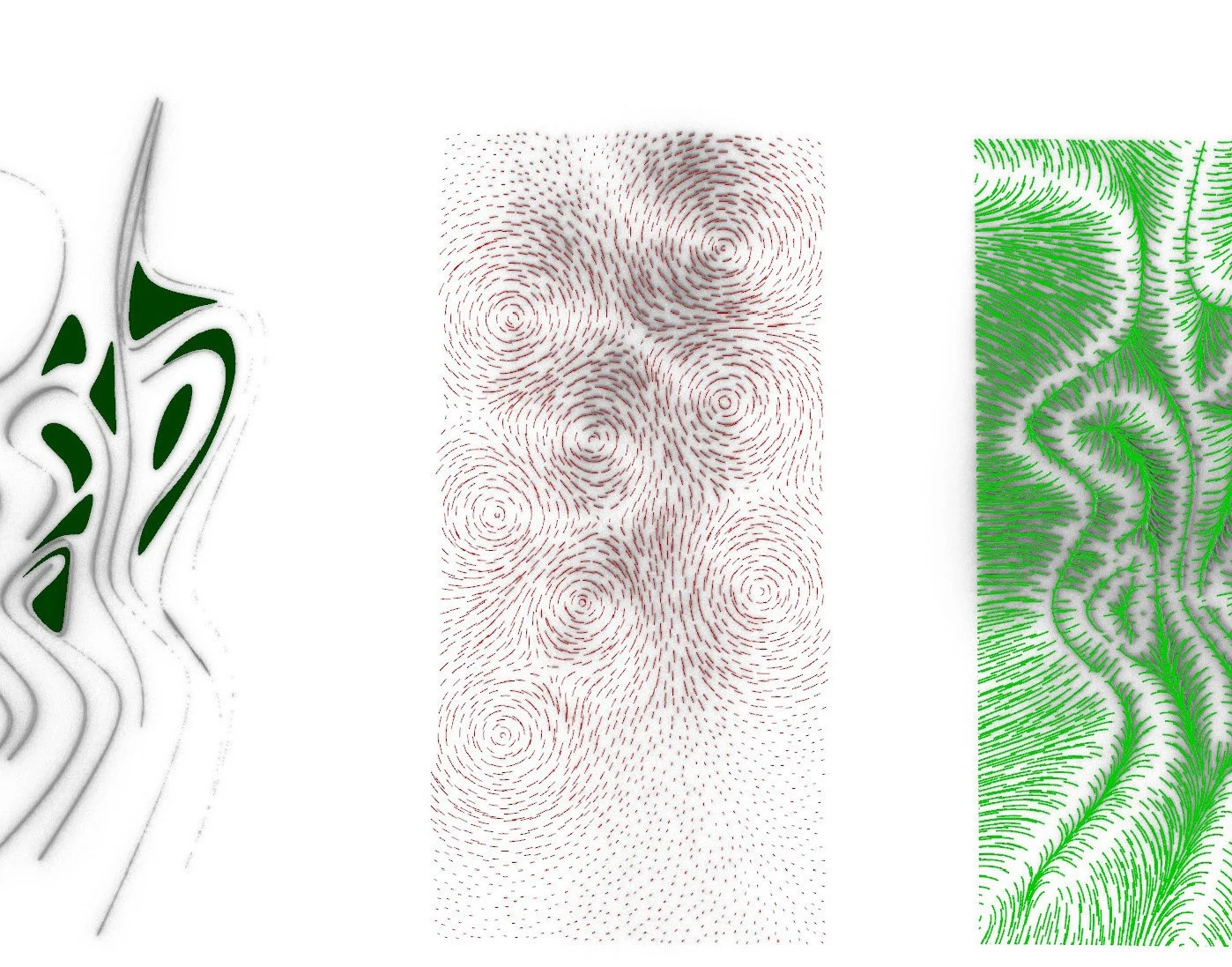
LOTL is a 750 hectare regional landscape where planting, water and terrain are designed as one system. We generated it from rules instead of drawing it by hand.
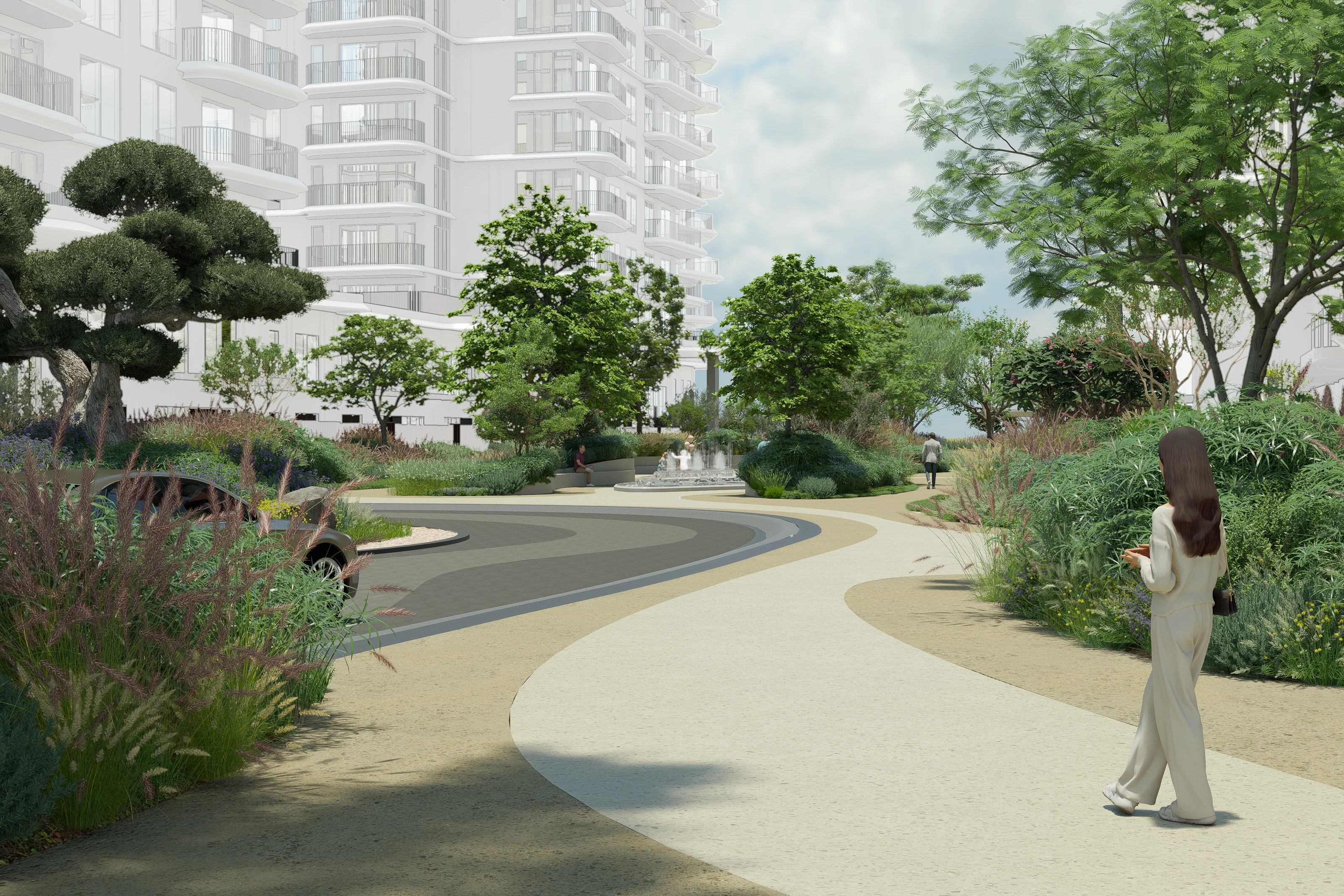
Al Fahid Terra Garden is a residential podium of about 45,000 square metres in Abu Dhabi. A curving path links the arrival, the seating and the planting.
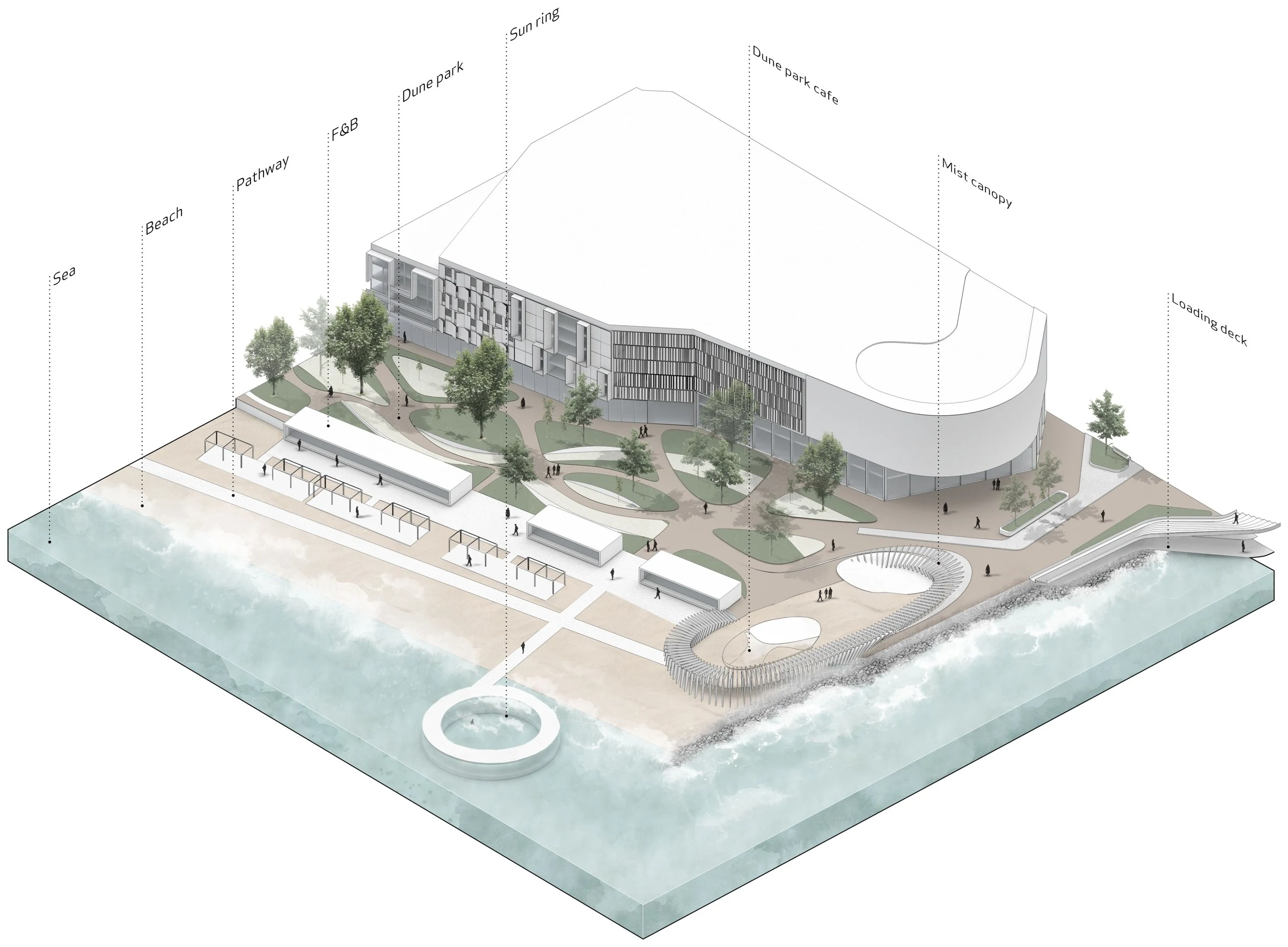
The Makers District waterfront on Al Reem Island has a fluidic zone at its beach end, after the pixel, fractal and dynamic zones. Soft, interlocking planting beds make a dune park beside the sea.
See LOTLSee Al Fahid Terra GardenSee the Makers District waterfront
Get in touch